June 30 – July 6, 2025
We’re in Canada!
We left International Falls, Minnesota a couple of days early and crossed into Canada at Fort Francis without any trouble. From there, our route on the Trans Canada Highway took us north through Sioux Narrows and Kenora past some beautiful lakes and summer cabins (an area we will have to investigate further in the future). Then we turned west until we reached our next destination – Winnipeg.
Town and Country Campground
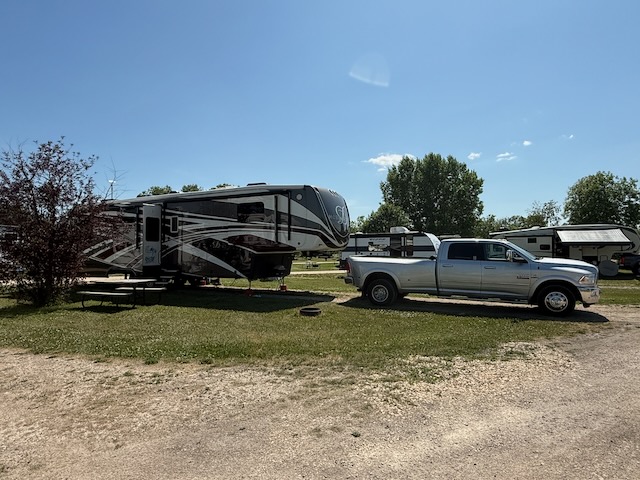
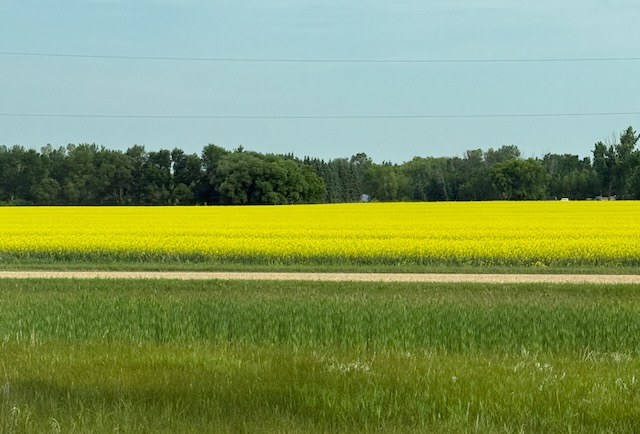
Our choice for a base was the Town and Country Campground located slightly southeast of the city. We had a large pull-thru site with plenty of space. Near the campground were fields full of bright yellow canola.
The next day was Canada Day so we decided to celebrate by grilling steaks. We thought that everyone in the campground would be enjoying cookouts as well. Instead. we watched as lots of folks packed up and pulled out. (Perhaps because it was a Tuesday?) I know that there were some activities in the central part of the campground as well as locations in town but we didn’t search them out.
Assiniboine Park Zoo
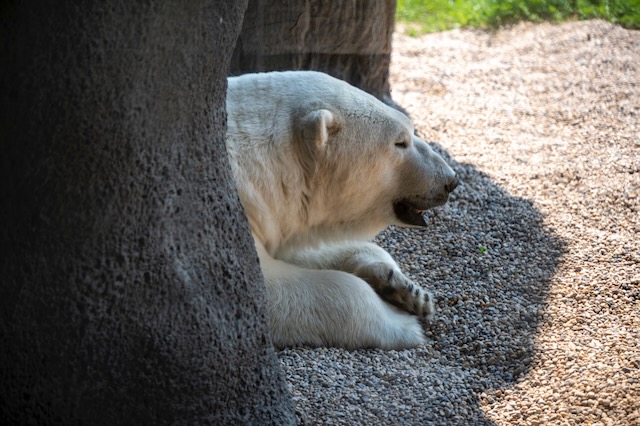
One of the things we wanted to do in Winnipeg was visit the zoo. (I wanted to see the polar bears).
Located 15 minutes from downtown Winnipeg, Assiniboine Park Zoo provides visitors with the opportunity to interact with animal species from all corners of the globe. Open year-round, with over 80 park-like acres to explore, the Zoo has been a favourite destination with visitors for over a century.
Discover the magic of the North in the heart of the continent. The award-winning Journey to Churchill exhibit is home to polar bears, muskoxen, Arctic fox, wolves and other northern species. It is the most comprehensive northern species exhibit of its kind in the world. Visitors experience a variety of naturalistic landscapes and animal viewing areas. Interpretive signage and interactive displays invite visitors to learn about biodiversity, climate change and conservation. It is an educational classroom like no other, inviting exploration, challenging thinking and promoting personal action.
Zoo
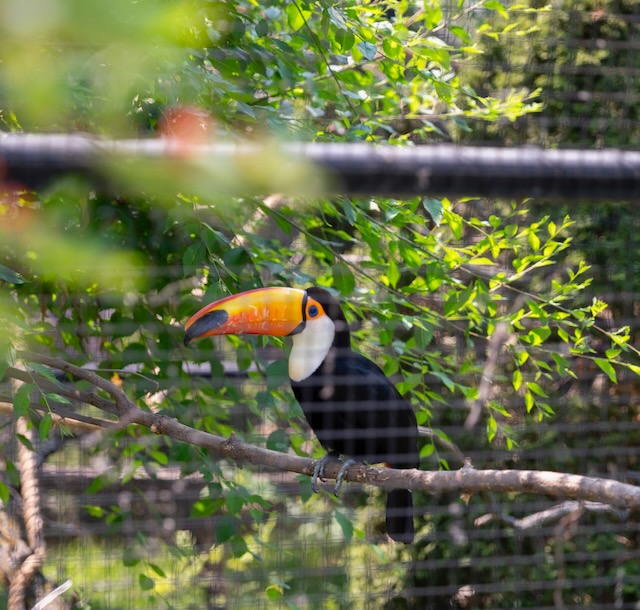
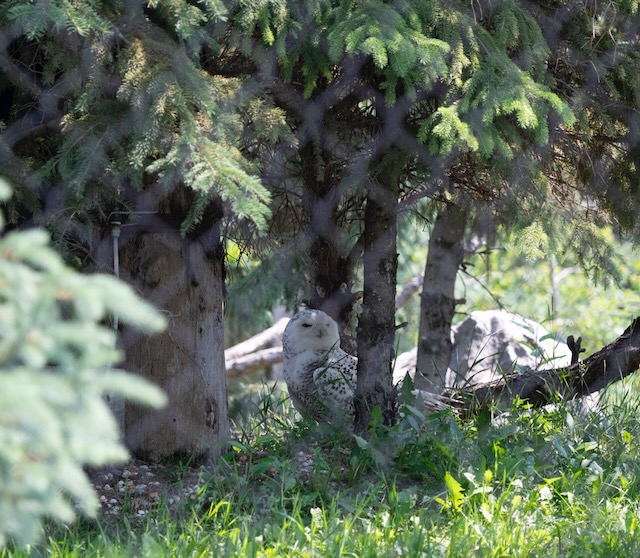
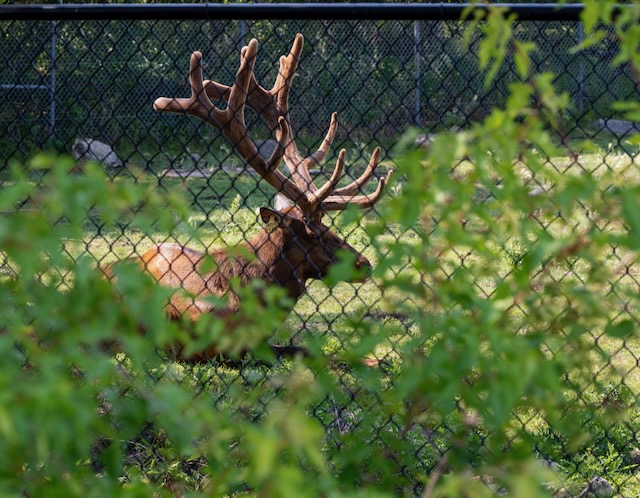
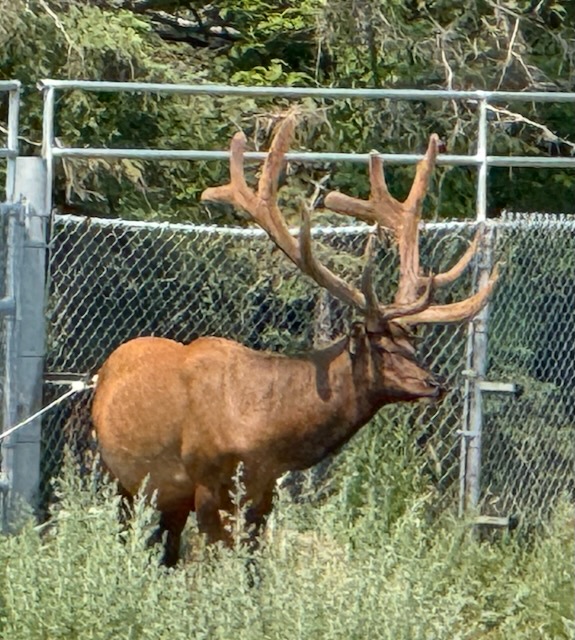
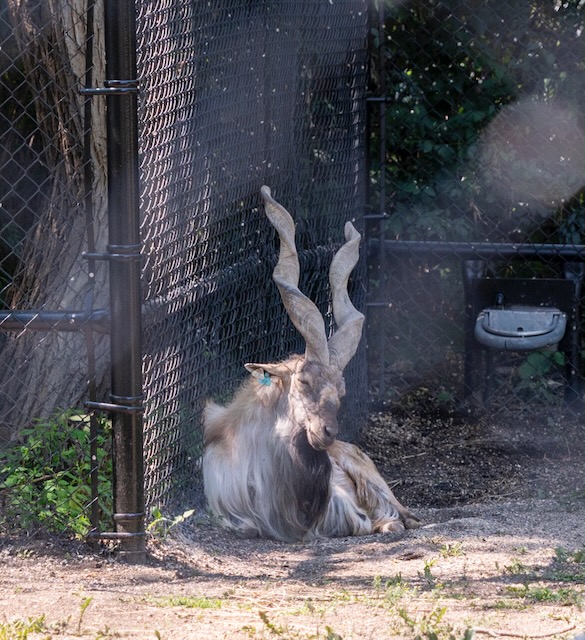
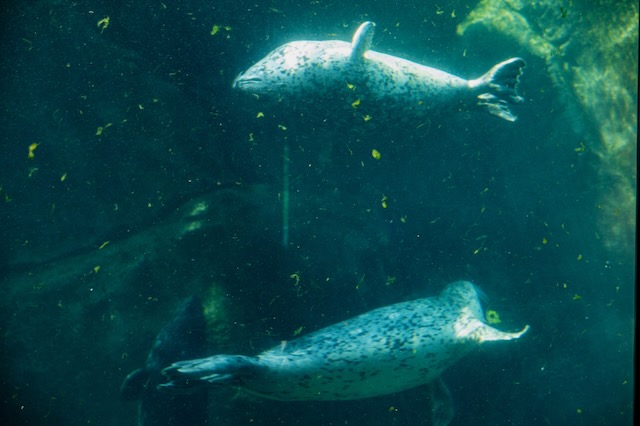
I had checked to see if we could do the Canadian Signature Experience Tour but the dates didn’t work out. Instead, we went on our own one afternoon. Below are some of the residents that we “met”.
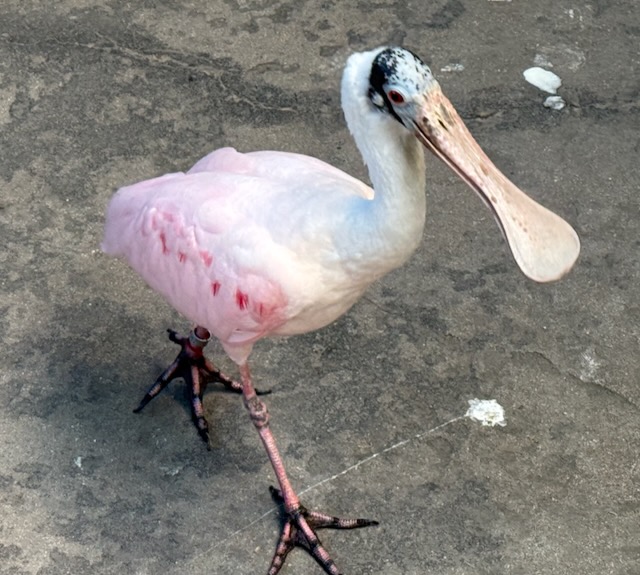
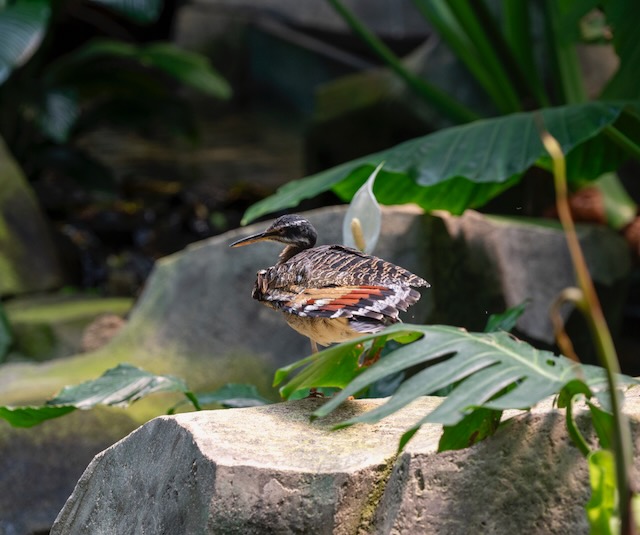


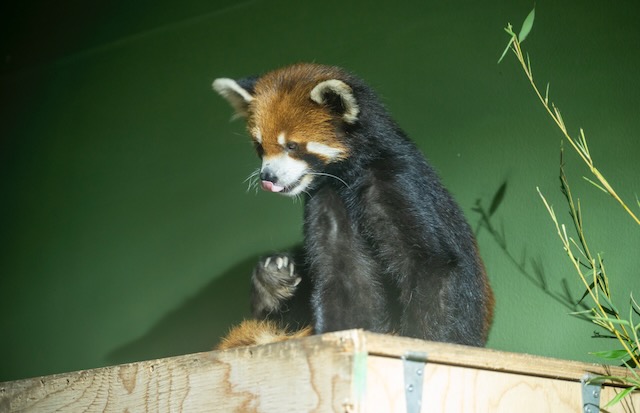
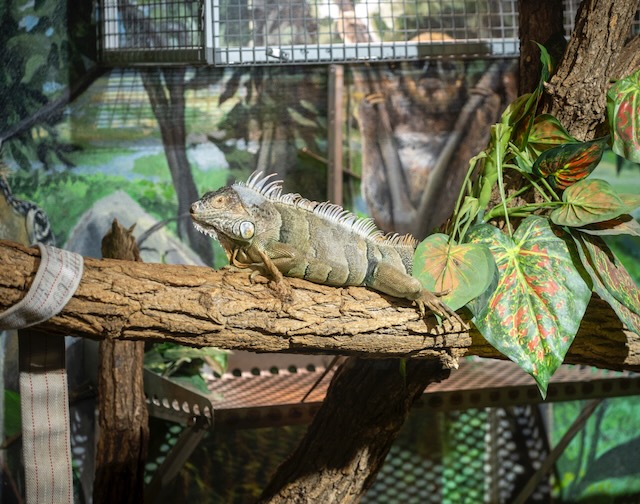

Royal Canadian Mint
One of our fellow campers had told us that we should take a tour of the Royal Canadian Mint which was nearby.
The Royal Canadian Mint’s Winnipeg location is a world leader in circulation coin design and innovation. Established in 1976 as a high‑tech, high‑volume manufacturing facility, every single Canadian circulation coin is produced here, as well as circulation coins for countries around the world.
Royal Canadian Mint
The building sits in a park-like setting, a triangular upthrust facing east. The shape is designed as a vertical contrast to the flat prairie horizon reminiscent of grain elevators, teepees, or mountains. It is the only “mountain” in Winnipeg. In front of the mint are up to 80 different international flags, representing the Mint’s extensive international clientele.
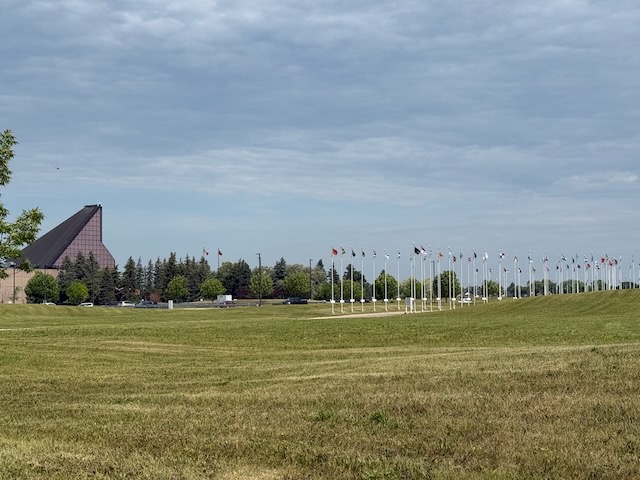
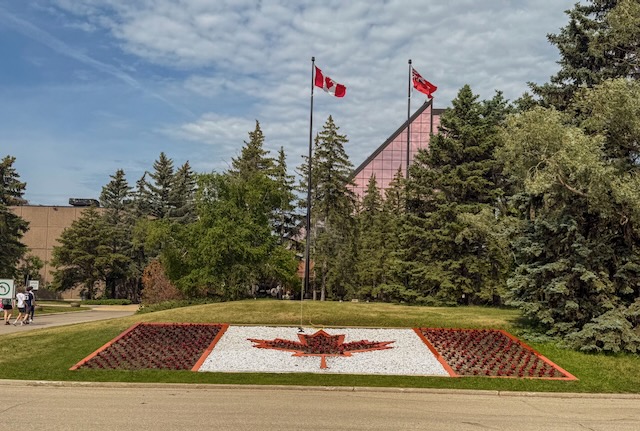
We took the 45 minute guided tour of the facility which included a view of the production floor, information about the technology and precision used to mass produce circulation coins, and an opportunity to view some of the rare coins and medals produced here.
We were not allowed to take photos inside nor did they provide free samples – bummer.
Walking Tours
Whenever we can, we love to do walking tours in the cities that we visit. In Winnipeg, we had arranged two different tours with Square Peg Tours. The guide for both tours was Kristen Treusch (who did a great job).
Boom and Bust Tour
The Boom & Bust of Winnipeg walking tour explores the rise and fall of Canada’s wealthiest city at the turn of the century. Walk through downtown and hear about how this prairie city became the Chicago of the North, the Heart of the Continent and how we lost it all (and it’s not just because of the Panama Canal)!
Topics covered are: street names, architectural styles, social movements such as the Wpg General Strike, monuments and more! This tour is a crash course in Winnipeg history in 2 hours!
Square Peg Tours
As we learned during our tour, Winnipeg was originally thought to be on track to become one of the largest cities in Canada. Instead, a number of factors contributed to its decline.
Economic Downturn:
- Post-War Recession: Winnipeg’s rapid growth in the early 20th century was fueled by a real estate boom and investment, but this bubble burst around 1912, leading to a recession.
- Inflation and Unemployment: The First World War exacerbated economic problems. High inflation made it difficult for workers to afford basic necessities, while returning soldiers faced high unemployment rates.
- Social Inequality: The war also highlighted the growing gap between the wealthy and the working class.Some business owners profited greatly during the war, while workers struggled with low wages and poor working conditions.
Winnipeg General Strike:
- Labor Unrest: Frustration over wages, working conditions, and the lack of job opportunities for returning soldiers led to widespread labor unrest.
- General Strike: In May 1919, building and metal workers went on strike, and their action was quickly joined by thousands of other workers in a general strike.
- Impact: The strike paralyzed the city, with essential services like transportation, mail, and utilities being shut down.
- “Bloody Saturday”: The strike ended with a violent confrontation on June 21, 1919, known as “Bloody Saturday,” where two people were killed and many injured.
- Legacy: While the strike was ultimately unsuccessful in achieving all of its goals, it became a pivotal moment in Canadian labor history and contributed to future labor reforms.
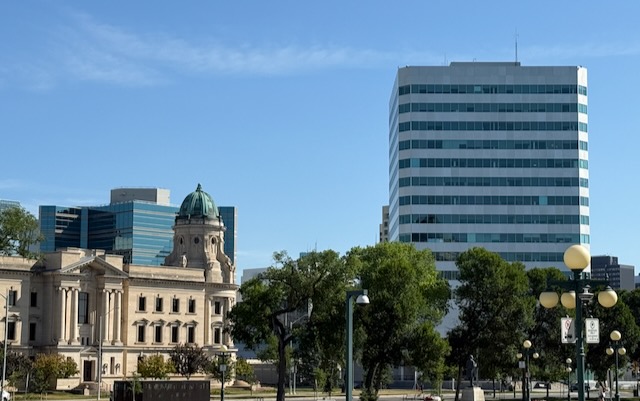
We learned a couple of other interesting facts about Winnipeg. First, the roads are terribly rough due to the fact that the city lies in a flood plain. Rains constantly wash away the roadway foundations. Second, we learned that Winnipeg gets all of its water from Ontario via an aqueduct.
The Greater Winnipeg Water District Aqueduct (GWWDA) is an aqueduct that supplies the city of Winnipeg, Manitoba, with water from Shoal Lake, Kenora District, Ontario. Winnipeg has relied on the lake as its source for safe drinking water since the aqueduct was put in service in 1919 at a cost of nearly CDN $16 million.
It has a capacity of 85 million imp gal (390 million L) per day (4.4 cubic metres per second), a capacity that was planned for a city of one million inhabitants; peak water usage by the city was in 1988 and the capacity of the aqueduct has never been entirely used.
The aqueduct extends approximately 154 kilometres (96 mi) from an intake structure on Shoal Lake to the Deacon Reservoir on the east side of the Winnipeg floodway, a few kilometres south of Highway 15. Water flows by gravity from the lake, since the aqueduct drops about 91 metres (300 ft) over its length.
wikipedia
Symbols, Secrets, and Sacrifices Under the Golden Boy Tour
The second tour with Square Peg Tours was a tour of Manitoba’s Legislature Building.
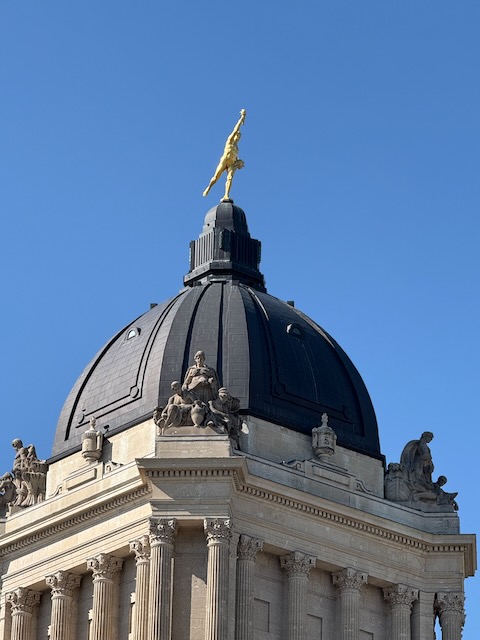
Venture into the Manitoba Legislature to discover how this building has a secret identity, created for a higher purpose and that may hide the Ark of the Covenant. Uncover the Golden Boy’s true identity and discover the secret images in the Great War Mural. And then the most exciting part, experience a unique and strange auditory phenomenon in the Pool of the Black Star.
Square Peg Tours
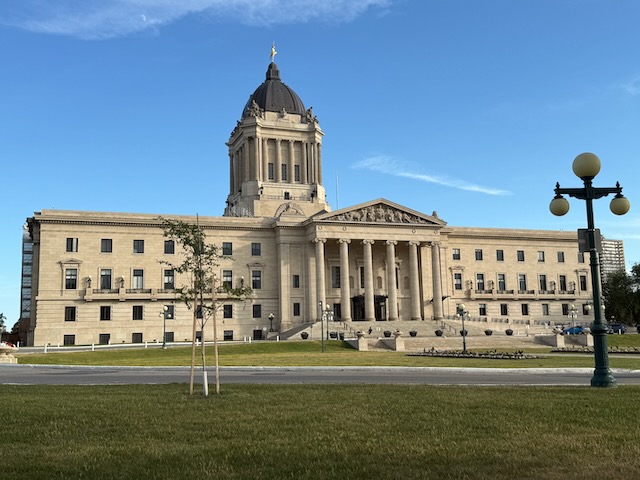
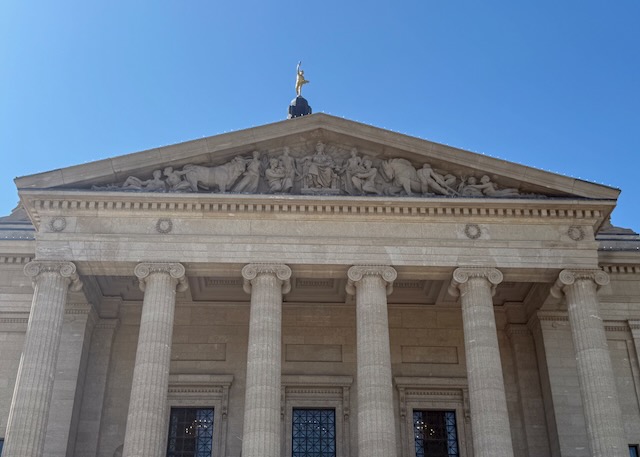
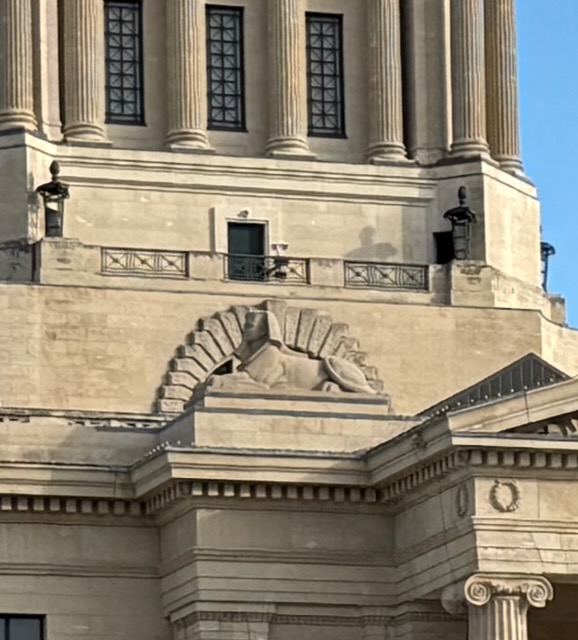
Prior to entering the building, our guide explained the significance of the architecture and drew our attention to the Pediment above the entrance, the two sphinx above that, and the Golden Boy that crowns the building.
By the turn of the 20th century, plans for a bigger and more impressive government building were being made. When a design contest was put out around 1912, 66 entries came in from across the British Empire. English architects Frank W Simon and Henry Boddington III won with their Beaux-Arts Classical Design. Allegorical images of wisdom, strength, and power are spread throughout the building – and much of the material used was sourced from Manitoba. The yellow-brown bricks come from Portage la Prairie, the red bricks from Roseisle, and the limestone is (of course) Manitoba Tyndall stone, taken from the quarries in Garson.
High hopes for the building were dashed not long after work began. Hired contractor Thomas Kelly fraudulently overcharged the Manitoba Government thousands of dollars, and kicked some of it back to then-premiere Rodmond P. Roblin. Once the scandal broke, Roblin lost power and Kelly fled the country – only to be caught and arrested several years later.
Perhaps the most persistent story to come out of this construction scandal is that of the missing columns; rumour has it that Kelly, on top of taking money from the project, was also pilfering material – and used columns meant for the Manitoba Legislative Building for his own front porch. This rumour was debunked, in 2018, by CBC News – and no one is entirely sure how it started in the first place.
Winnipeg Million Dollar Mystery
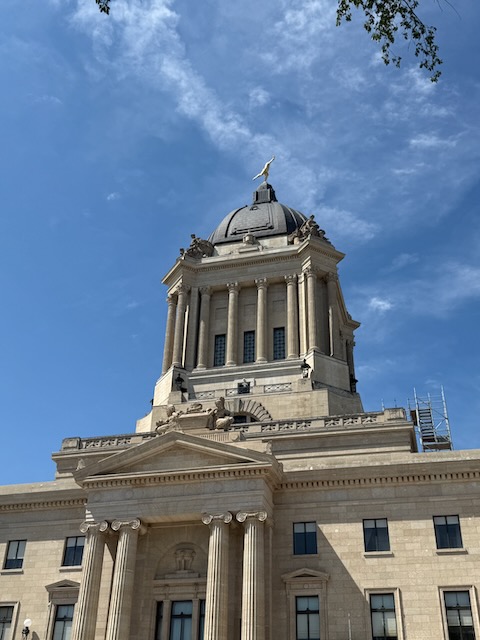
Then our guide led us inside where she identified some of the elements that have spawned theories (propagated by Frank Albo) about links to Freemasons, Fibonacci numbers, and even Solomon’s Temple.
Frank Albo, routinely nicknamed “Winnipeg’s Dan Brown” (of Da Vinci Code fame), is the go-to expert on the eclectic architecture at the Manitoba Legislative Building. Albo’s writings on the subject, and acclaimed tours, have garnered international attention and fascination. Albo posits that the building’s architect, Frank Simon, was a part of the Freemasons, a fraternal order that dates its origins back to the 14th century and that Simon took the Mason’s teachings to heart. Throughout the Legislative Building, you will find iconography that ties back into classical mythology. Medusa watches from above the grand staircase, two sphinxes guard the building’s main entrance, and sacred geometry (the idea that there are symbolic meanings tied to geometric shapes and proportions) was a key factor in the building’s design.
Albo makes an engaging case that, given the layout and iconography, the Manitoba Legislative Building is built to be a modern-day Solomon’s Temple.
Winnipeg Million Dollar Mystery
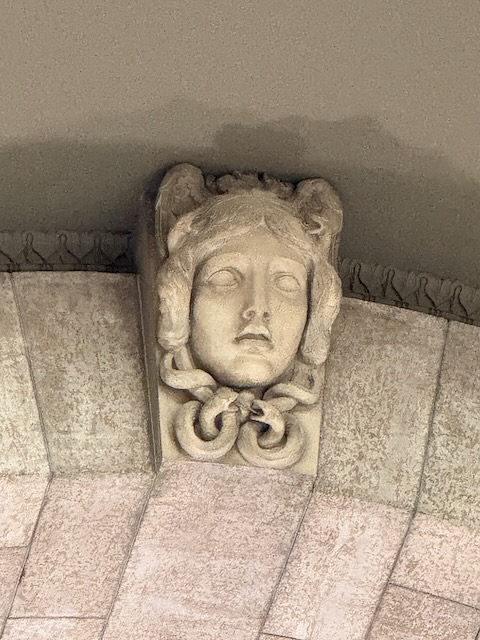
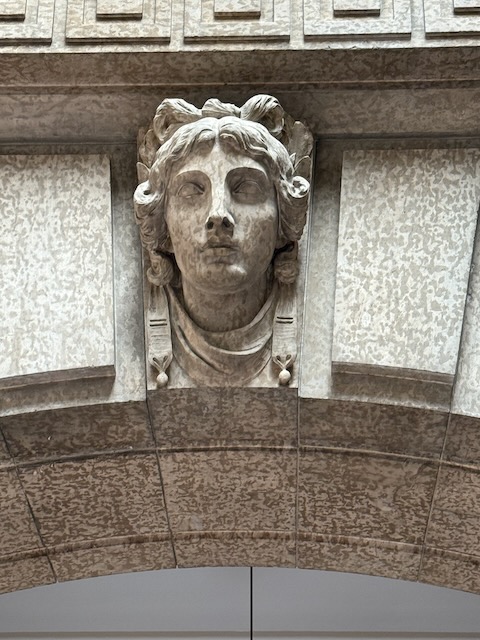
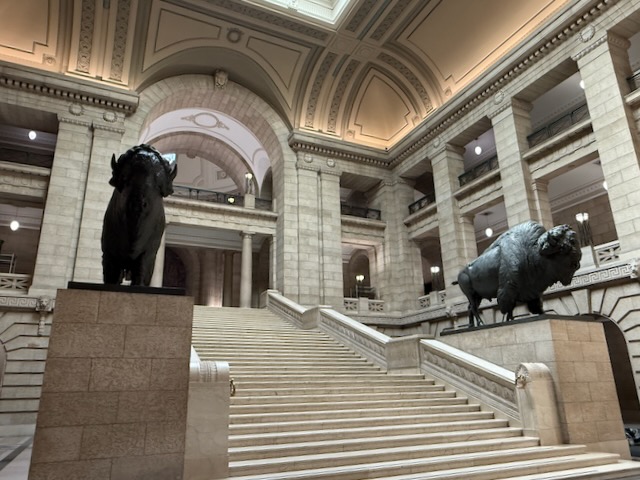
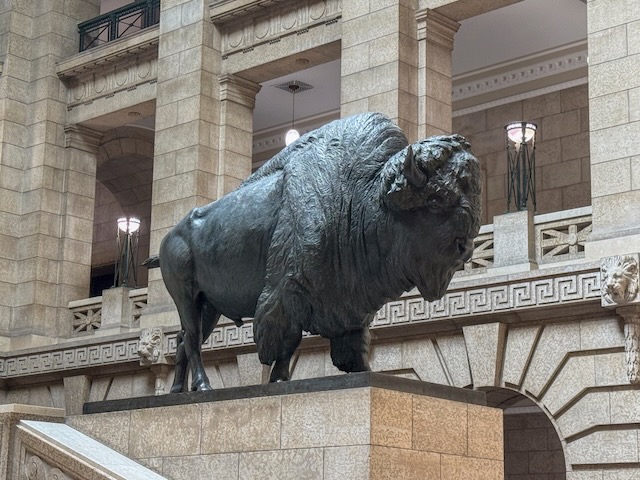
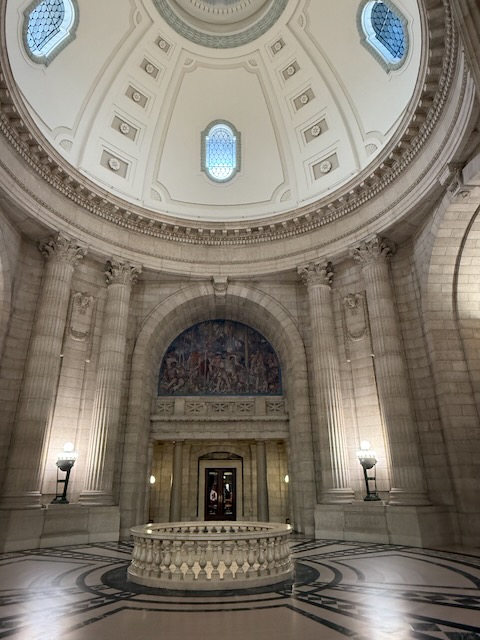
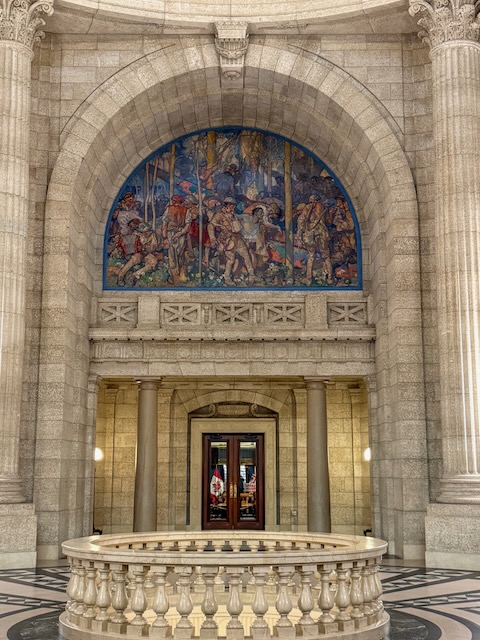
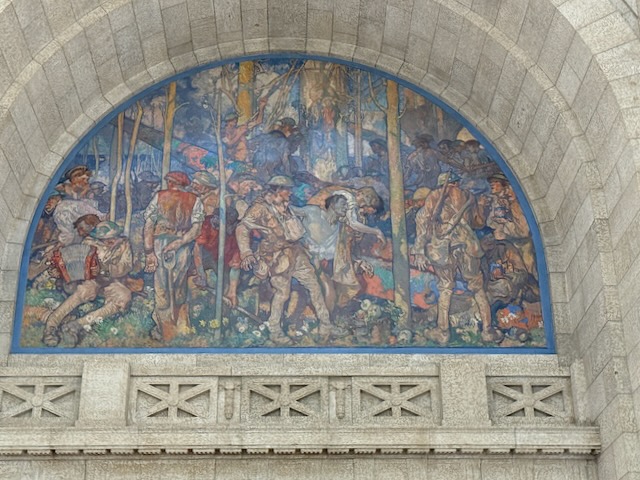
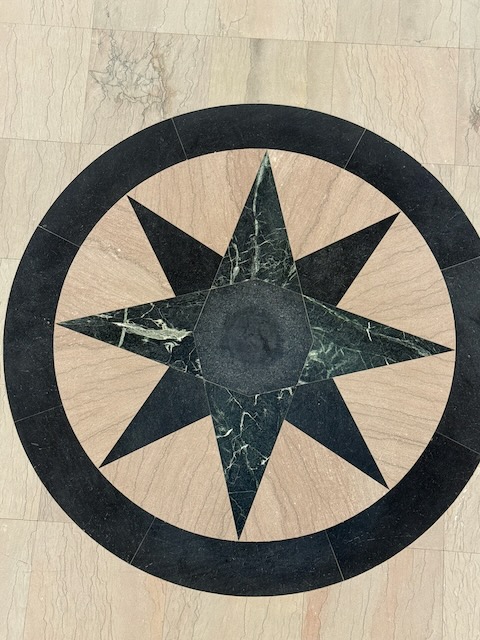
We each had the opportunity to stand in the center of the Black Star and experience the strange acoustics there. It was almost like a “cone of silence”.
For more details about the mysteries of the building, check out the following link to a video presentation by Dr. Frank Albo.
Digital Tour of Manitoba Legislature Building
We had a great time exploring Winnipeg but it was time to move on to the next province – Saskatchewan.

How fascinating! I always learn so much from your posts. I didn’t know there were Roseate Spoonbills that far north! Love seeing all your new “friends” at the zoo. The legislature building is magnifique!
Since this was from a month ago, I’m wondering where you are now. 🤔